
-
Heating
- Dimplex Quantum Storage Heaters
- Dimplex Q Rad Electric Radiators
- Electric Panel Heaters
- Infrared Panel Heaters
- Electric Radiators
- Storage Heaters
- Convector Heaters
- Oil Filled Radiators
- Conservatory Heaters
- Fan Heaters
- Heated Towel Rails
- Heating Controllers
- Over Door Heaters
- Tubular Heaters
- Plinth Heaters
- Workshop & Garage Heaters
- What is Dimplex Control?
- Hand Dryers
- Underfloor Heating
-
Electric Car Chargers
- Pod Point EV Chargers
- Ohme EV Chargers
- Zappi EV Chargers
- Easee EV Chargers
- Hypervolt EV Chargers
- Wallbox EV Chargers
- Sync Energy Chargers
- Project EV Chargers
- EVEC EV Chargers
- Indra EV Chargers
- Zaptec EV Chargers
- Hydra EV Chargers
- VCHRGD EV Chargers
- Seren EV Charger
- Vestel EV Chargers
- Juice EV Chargers
- Marlec Veva EV Chargers
- Deta eVolo EV Chargers
- Andersen EV Chargers
- Rolec EV Chargers
- EV Cable
- Type 2 EV Charging Cables
- Octopus EV Chargers
- Portable EV Chargers
-
Extractor Fans & Ventilation
-
Lighting & Light Bulbs
- Ceiling Lights
- Pendant Lighting
- Table Lamps & Desk Lights
- Wall Lights
- Floor Lamps
- Chandelier Lights
- Downlights
- Bulkhead Lights
- LED Strip Lights
- Bathroom Light Fittings
- Spotlights
- Under Cabinet Lighting
- Plinth Lights
- LED Panel Lights
- LED Batten Lights
- Linear Lights
- Track Lighting
- Emergency Lighting
- High Bay LED Lights
- Low Bay Lighting
- Security
- Solar & Battery
- Smoke Alarms & Detectors
- Circuit Protection
-
Wiring Accessories
- White Sockets
- Brushed Metal Sockets
- Chrome Sockets
- Black Nickel Sockets
- Matt Black Sockets
- USB Plug Sockets
- Antique Brass Sockets
- Zano LED Dimmer Switches
- Extension Leads, Plugs & Adaptors
- Industrial Plugs & Sockets
- Metalclad Sockets
- Outdoor Sockets
- RCD Sockets & Spurs
- Floor Sockets and Boxes
- Smart Sockets & Switches
-
Cable & Cable Management
-
Tools & Fixings
- Step Ladders & Work Platforms
- Electrical Screwdrivers
- Cable Cutters & Pliers
- Wire Strippers
- Saws Knives & Discs
- Hole Saws
- Drill Bits
- Cable Rods & Draw Tapes
- Crimping Tools
- Tape Measures & Spirit Levels
- Hammers Bolsters & Prybars
- Re-Threading Tools
- Batteries
- Tool Bags
- Utility Keys & Padlocks
- Markers & Spray Paint
- Label Printers
-
Brands
- Adax
- Aico Smoke Alarms
- Airflow Fans
- Airforce
- Airmaster
- Anda
- Andersen EV
- Ansell Lighting
- Appleby
- Armeg
- ASD Lighting
- Astro Lighting
- Aurora
- Bell Lighting
- BG Electrical
- Brackenheath
- Brother
- Burco
- Channel Safety
- CK Tools
- Collingwood Lighting
- Connexbox
- CP Electronics
- Crabtree
- Creda Heating
- CT1
- Danlers
- Demon Cato
- Deta Electrical
- Deta.e
- DeXpro
- Dimplex Heaters
- Doncaster Cables
- Draper Tools
- Easee
- Eaton MEM
- EcoLink
- Elkay
- Elnur Heaters
- Ellipse
- EnviroVent Fans
- Erico Caddy UK
- ESP UK
- Eterna Lighting
- Europa Components
- EV Blocks
- EVEC
- EV Tower
- FireAngel
- Flexicon
- Forum Lighting
- Fusebox
- Garo
- Greenbrook
- Greenwood Airvac
- Hager Electrical
- Hamilton Litestat
- Havells Sylvania
- Heatrae Sadia
- Hyco
- Hydra
- Hypervolt
- IHS
- Indra
- Industrial Signs
- JCC Lighting
- Jeani Accessories
- Kewtech
- Kingfisher Lighting
- Knipex Tools
- Kosnic
- Lewden
- Luceco Lighting
- Lumi-Plugin
- Manrose
- Marlec
- Marshall Tufflex
- Masterplug
- MK Electric
- MK Sentry
- ML Accessories
- MyEnergi
- Myson
- National Ventilation
- Nebo
- NICEIC
- Nuaire
- Ohme
- Ovia Lighting
- Philex
- Philips Lighting
- Pod
- PowerLED
- Project EV
- ProofVision
- Prysmian
- QCells
- Redring
- Ring Doorbells
- Robus LED
- Rointe Heaters
- Rolec EV
- Runpotec
- Sangamo




Electricpoint | What's the Point?
-
Best Consumer Units for Solar & Battery Installs
Posted: February 18, 2026 |Author: Christie-Lee Daniels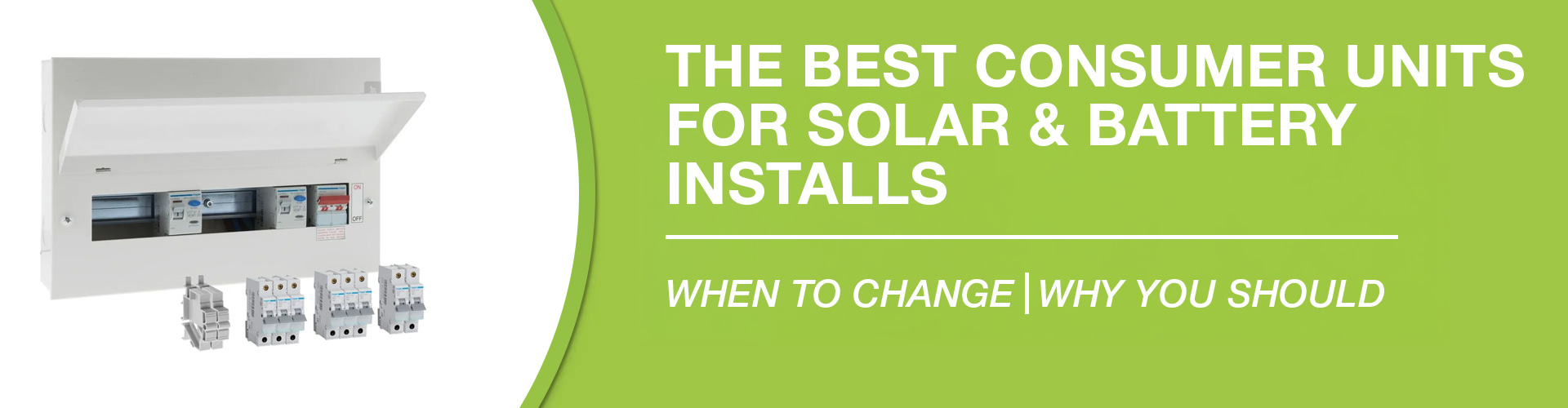
As solar panels and home battery storage become more common across the UK, one upgrade is often overlooked: the consumer unit.
Whether you’re adding solar PV, battery storage or installing both under schemes like the Warm Homes Plan, the existing board needs to be assessed for capacity, compliance and future expansion. In many cases, a full upgrade is the safest and most professional solution.
This guide explains what to look for — and which consumer units are best suited to solar and battery installations.
Why Solar & Battery
-
Electric Heating vs Heat Pumps: Which Upgrade Option Makes Sense?
Posted: February 13, 2026 |Author: Christie-Lee Daniels
As more UK homes undergo energy-efficiency upgrades under programmes like the Warm Homes Plan, homeowners and landlords are increasingly asking the same question:
Should we install a heat pump, or switch to electric heating?
Both technologies support the move away from fossil fuels, but they suit different property types, budgets and installation scenarios. Understanding when each option makes sense helps installers, landlords and homeowners choose the most practical and cost-effective solution.
What’s the Difference Between Electric Heating and Heat Pumps?
Electric Heating
-
Battery Storage Systems on Home Upgrade Jobs
Posted: January 29, 2026 |Author: Christie-Lee Daniels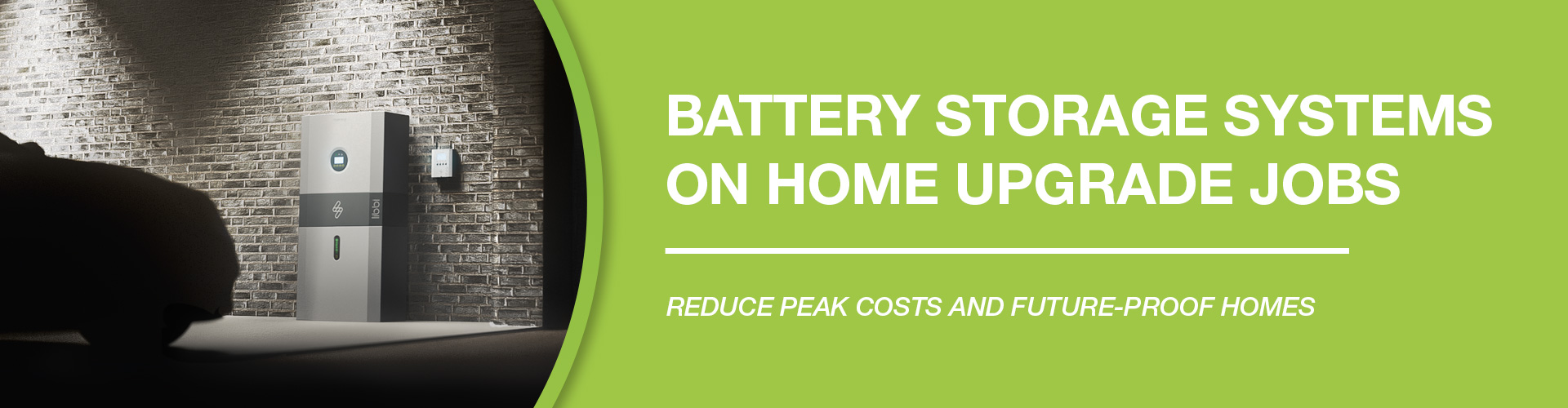
As more UK homes are upgraded under schemes like the Warm Homes Plan, battery storage is becoming an increasingly common addition to domestic electrical work. While solar panels and EV chargers often get the attention, battery storage is what allows households to use energy more efficiently, reduce peak costs and future-proof their homes.
For electricians working on home upgrades and electrification projects, knowing when to recommend battery storage — and what to consider electrically — is becoming essential.
-
Smart Controls & Flexible Tariffs Explained
Posted: January 29, 2026 |Author: Christie-Lee Daniels
With energy prices still a major concern, many households are being encouraged to use electricity at cheaper times of day. This is where flexible tariffs and smart controls come in. Real-world examples include the British Gas Dimplex Quantum Tariff, which optimises charging for Dimplex Quantum storage heaters during the lowest-cost periods (typically a reduced rate from 12:30am to 7:30am), and Octopus Energy's Intelligent Octopus Go, which smart-charges
-
The Warm Homes Plan Explained: What It Means for Homes, Bills and Energy in the UK
Posted: January 27, 2026 |Author: Christie-Lee Daniels
The UK government’s Warm Homes Plan is a long-term programme designed to make homes warmer, cheaper to run and better suited to a low-carbon future. It focuses on upgrading existing homes rather than building new ones, with the aim of cutting energy bills, reducing fuel poverty and improving comfort.
This guide explains the Warm Homes Plan in simple terms — what it is, why it matters, and what changes households are likely to see.
What is the Warm Homes Plan?
The Warm Homes Plan is a national programme to improve how UK homes use energy. It combines funding,
-
Greenwood Unity CV2GIP Manual
Posted: January 26, 2026 |Author: Artur Kazusek
Unity CV2GIP Installation Guide
Decentralised Mechanical Extract Ventilation (dMEV)
-
Warm Homes Plan: 5 Things Electricians Need to Know
Posted: January 26, 2026 |Author: Christie-Lee Daniels
The UK government’s Warm Homes Plan is set to drive millions of domestic energy upgrade projects over the coming years. While heat pumps and insulation often make the headlines, a huge portion of the practical work will fall to electricians.
What is the Warm Homes Plan?
The Warm Homes Plan is a national programme designed to help households cut energy bills, improve comfort, and support the switch to cleaner energy at home. For electricians, it signals a major increase in retrofit work involving electrification, safety upgrades and smart energy technologies.
Key points (in simple terms):
- Major investment in home upgrades to improve warmth, efficiency and affordability.
- Support for a range of household types including homeowners, renters and social housing.
-
Why Ventilation Is Essential After Insulation Upgrades
Posted: January 26, 2026 |Author: Christie-Lee Daniels
As homes become more energy efficient, they also become more airtight. While insulation and draught-proofing are essential for reducing heat loss and lowering bills, they also change how a building behaves.
Without adequate ventilation, upgraded homes are far more likely to suffer from condensation, damp and mould — problems that can undo the benefits of retrofit work and lead to complaints after installation.
This is why ventilation is no longer an optional extra on domestic upgrades. It is a core part of a successful retrofit.
Why Insulation Changes the Ventilation Requirement
Traditional housing has relied heavily on natural air leakage. Once insulation upgrades are carried out, that airflow is reduced.
Common consequences include moisture build-up, condensation on windows and cold surfaces, mould growth in bedrooms and bathrooms and poor indoor air quality. These issues are especially
-
Why Surge Protection Is Becoming Standard in Homes
Posted: January 26, 2026 |Author: Christie-Lee Daniels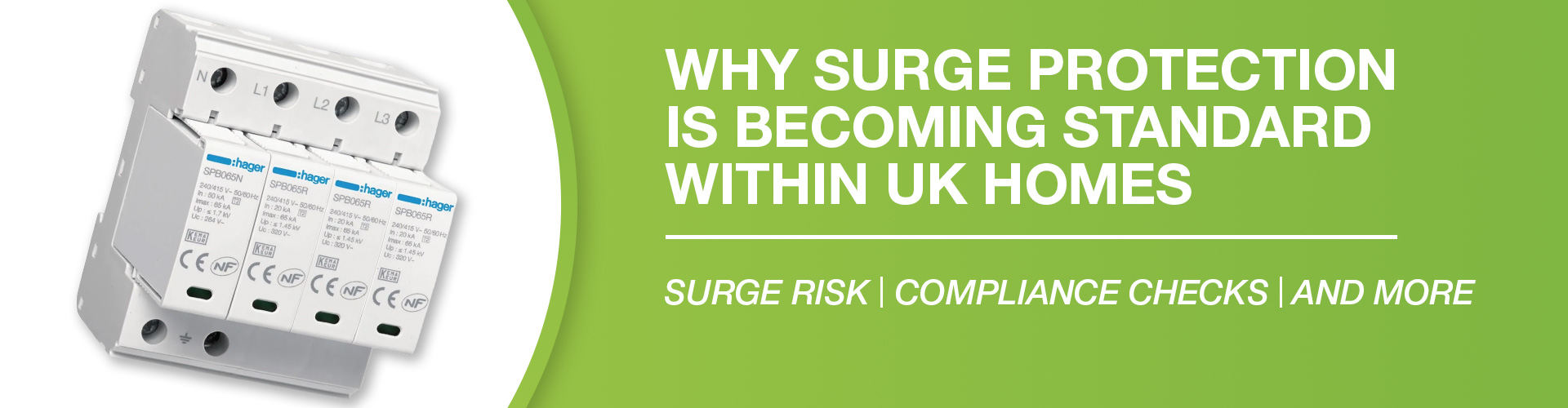
As homes electrify — with battery storage, EV chargers, inverters, and smart controls at the heart of energy generation, storage, and use — they become far more reliant on reliable electronic safety. These modern technologies are much more vulnerable to voltage disturbances than traditional loads.
That's why surge protection is now increasingly expected (and often required) on domestic retrofit projects.
Why Surge Risk Is Increasing in Modern Homes
More sensitive electronics = greater vulnerability. Older domestic systems handled mostly simple loads, but today's retrofitted homes include:
- Battery inverters
- EV chargers
- Smart meters and monitoring devices
- Home energy management systems
These can suffer damage from transient overvoltages
-
Why Consumer Unit Upgrades Are Essential for Warm Homes Plan Retrofits
Posted: January 26, 2026 |Author: Christie-Lee Daniels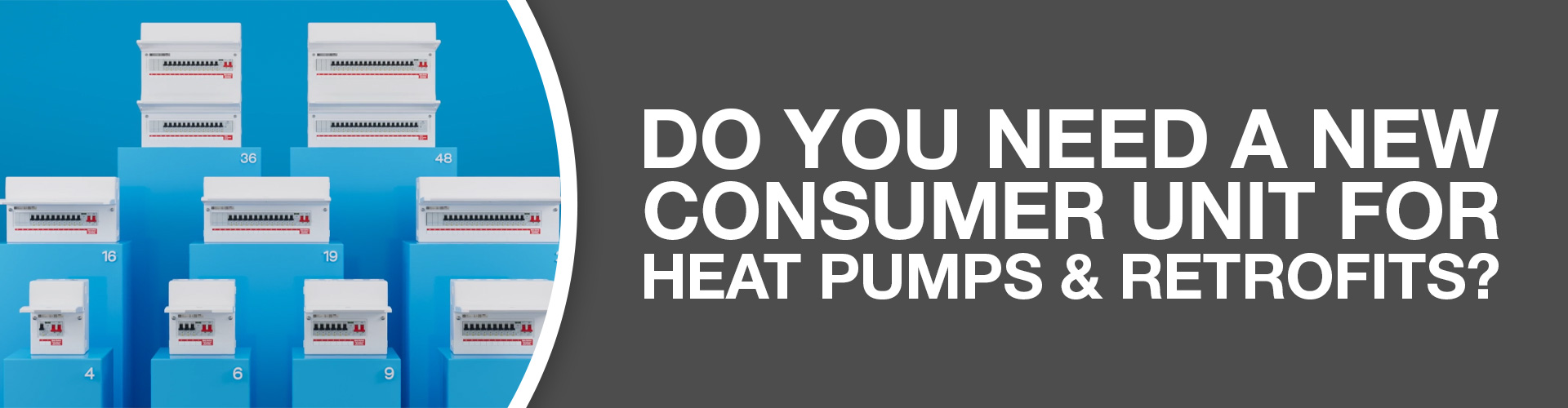
Domestic retrofit work driven by the Warm Homes Plan is expanding the scope of electrical installations. While heat pumps, batteries, and EV chargers often steal the spotlight, many projects quickly uncover a core issue: the existing consumer unit simply isn’t up to the task.
As homes become more electrified and energy demands rise, consumer unit upgrades are turning into a frequent — and often unavoidable — step in domestic retrofit jobs.
Why Consumer Unit Upgrades Are Becoming More Common
Most UK homes weren’t built for today’s electrical loads. Introducing modern tech quickly exposes the limitations of older setups.
Increased electrical demand